
- Our Services
What is IVF?
Who Needs IVF?
IVF may be recommended for
Blocked or damaged fallopian tubes
Low sperm count or male infertility
Endometriosis
Ovulation disorders
Advanced maternal age
Unexplained infertility
Recurrent IVF failure
Genetic screening needs
Common Symptoms or Signs
Difficulty conceiving after 6–12 months
Irregular menstrual cycles
Recurrent pregnancy loss
Painful periods
Known sperm abnormalities
Previous failed fertility treatments
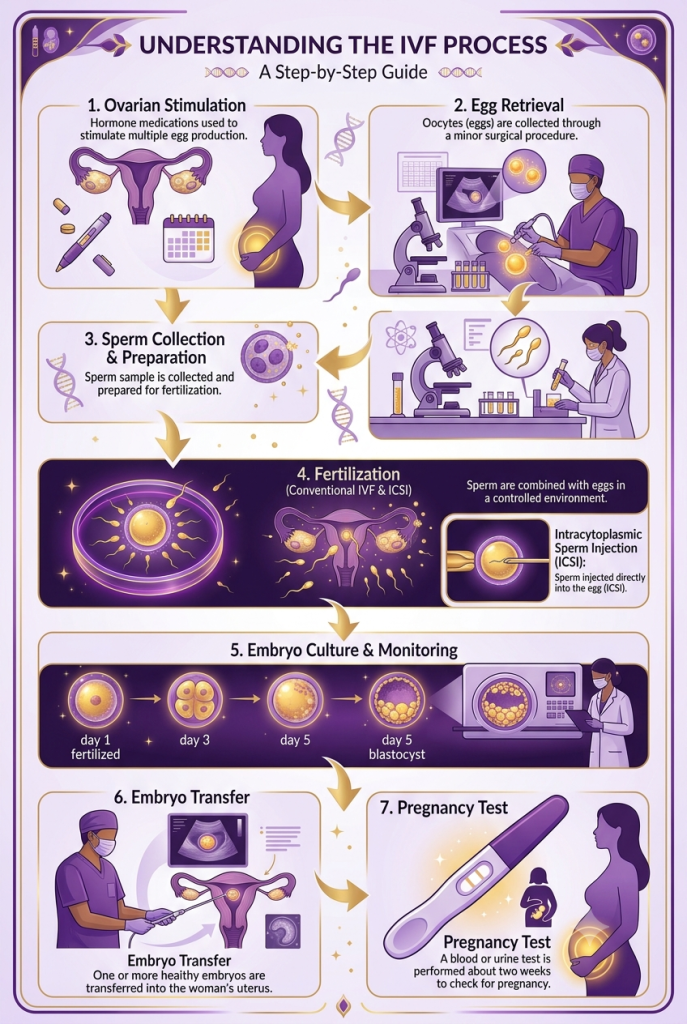
How IVF Treatment Works
Fertility assessment and investigations
Ovarian stimulation with medication
Egg collection procedure
Fertilization in the IVF laboratory
Embryo culture and monitoring
Embryo transfer into the uterus
Pregnancy testing and follow-up care
Success Factors
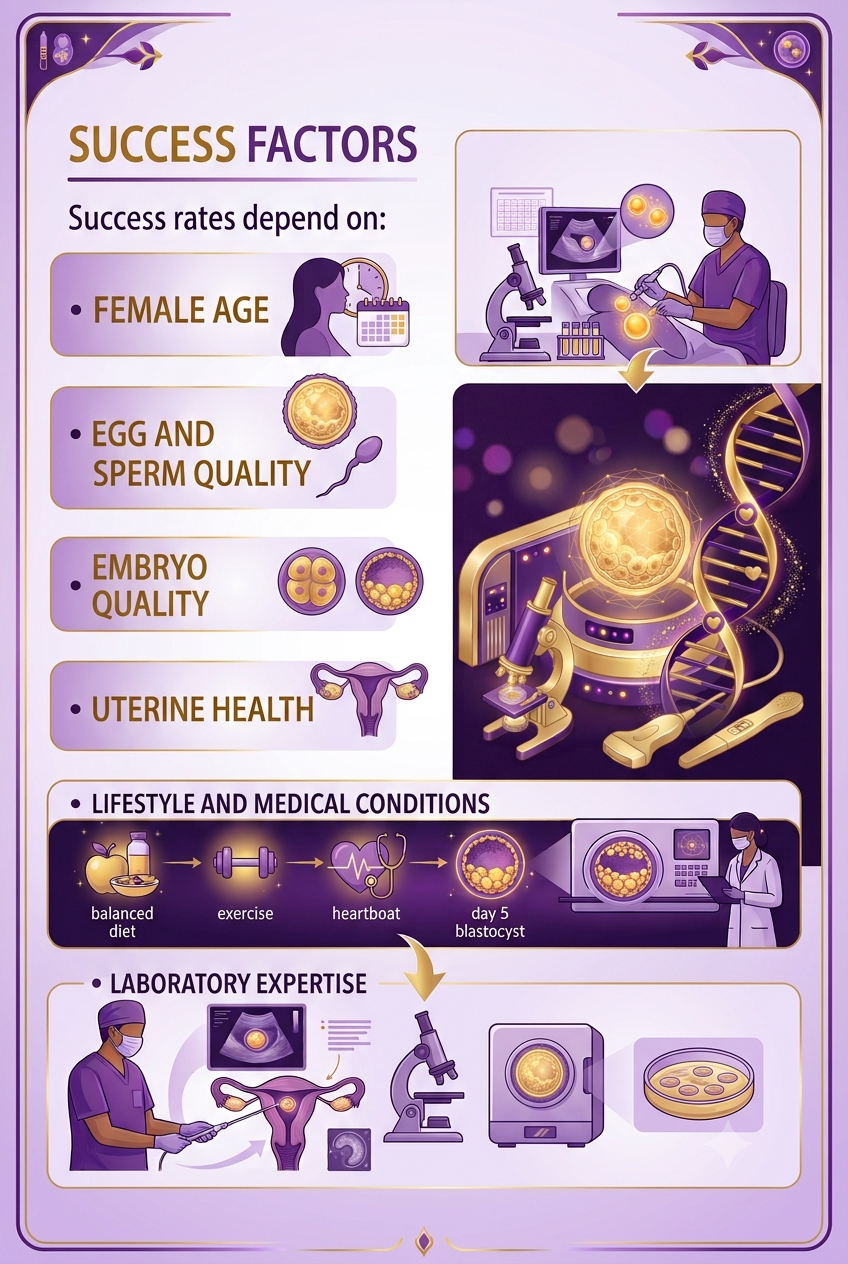
Success rates depend on:
Female age
Egg and sperm quality
Embryo quality
Uterine health
Lifestyle and medical conditions
Laboratory expertise
Find Out Answers Here
FREQUENTLY ASKED QUESTIONS (FAQs)
Begin Your Parenthood Journey Today
Book an Appointment
Your dream of parenthood deserves the right support. At Best Life Fertility, our
experts are here to walk with you every step of the way, combining advanced fertility
treatments with compassionate care.